When love feels like hard work.
Allan's take on why good relationships struggle — and the skills that turn ruptures into repair.
You love each other, but you're not on the same page. Maybe it's the same argument on a loop. Maybe you've stopped discussing the important things altogether, because any conversation might tip into a fight. You could be lying next to your partner feeling lonelier than when you were single — or so consumed by work, kids and logistics that you feel more like flatmates than partners.
Relationship problems aren't only dramatic fights. They're the distance at the dinner table, the conversations you've learned to avoid, the realisation you haven't laughed together in months. What we want — all of us — is to feel seen, safe and soothed by the person beside us.
You're not failing — relationships are just hard
Nobody teaches us how to manage conflict, stay close under stress, or grow together. Many couples believe love should be enough; it isn't, on its own, when life stacks work pressure, parenting, money worries and ageing on top.
Harmful patterns sneak in slowly. You avoid certain topics. One of you gets defensive while the other shuts down. Each move feels safer in the moment — and each builds distance and resentment over time.
How relationship trouble shows up
- Communication breakdown: tense conversations, hidden meanings, second-guessing the wording of a text.
- Emotional distance: you discuss who's picking up the kids, never how you're actually doing.
- Conflict patterns: heated arguments that resolve nothing — or no arguments at all while resentment ferments.
- Physical disconnection: affection that feels forced, intimacy that's become rare or routine.
- Different directions: wanting different things and not knowing how to close the gap without giving yourself up.
- External stress: work, money, family demands — each leaking into the relationship.
The Four Horsemen
Decades of research by the Gottmans, with thousands of couples, identified four communication styles that predict relationship trouble with uncanny accuracy: criticism, defensiveness, contempt and stonewalling. Most struggling couples are running at least two. The good news: each has a researched antidote, and they're learnable.
What we do about it
- Map your cycle: how you each communicate, handle conflict and reach for connection — without blaming either of you. The pattern is the problem, not the people.
- Learn repair: practical communication and de-escalation tools used by couples who last. Not theory — moves you practise.
- Deliberate practice: exercises between sessions, because new patterns need reps before they hold under pressure.
- Build the team: the goal isn't zero conflict; it's facing challenges as allies rather than opponents.
Working on it alone
Sometimes one of you isn't ready for counselling — or you want to understand your own patterns and attachment style first, or you're weighing up a separation and need clarity. Individual relationship work is valuable in all of those cases, and it often shifts the dynamic at home on its own. More on couples and individual relationship work.
Why my background helps
I've been in a partnership for decades and faced my own challenges, so I understand the pressures modern couples face — especially in Western Sydney, where commutes, shift work and mortgages put real strain on real families. Lasting relationship change happens through intentional work over time, not grand gestures. Most couples tell me they wish they'd come in sooner, before the patterns got entrenched.
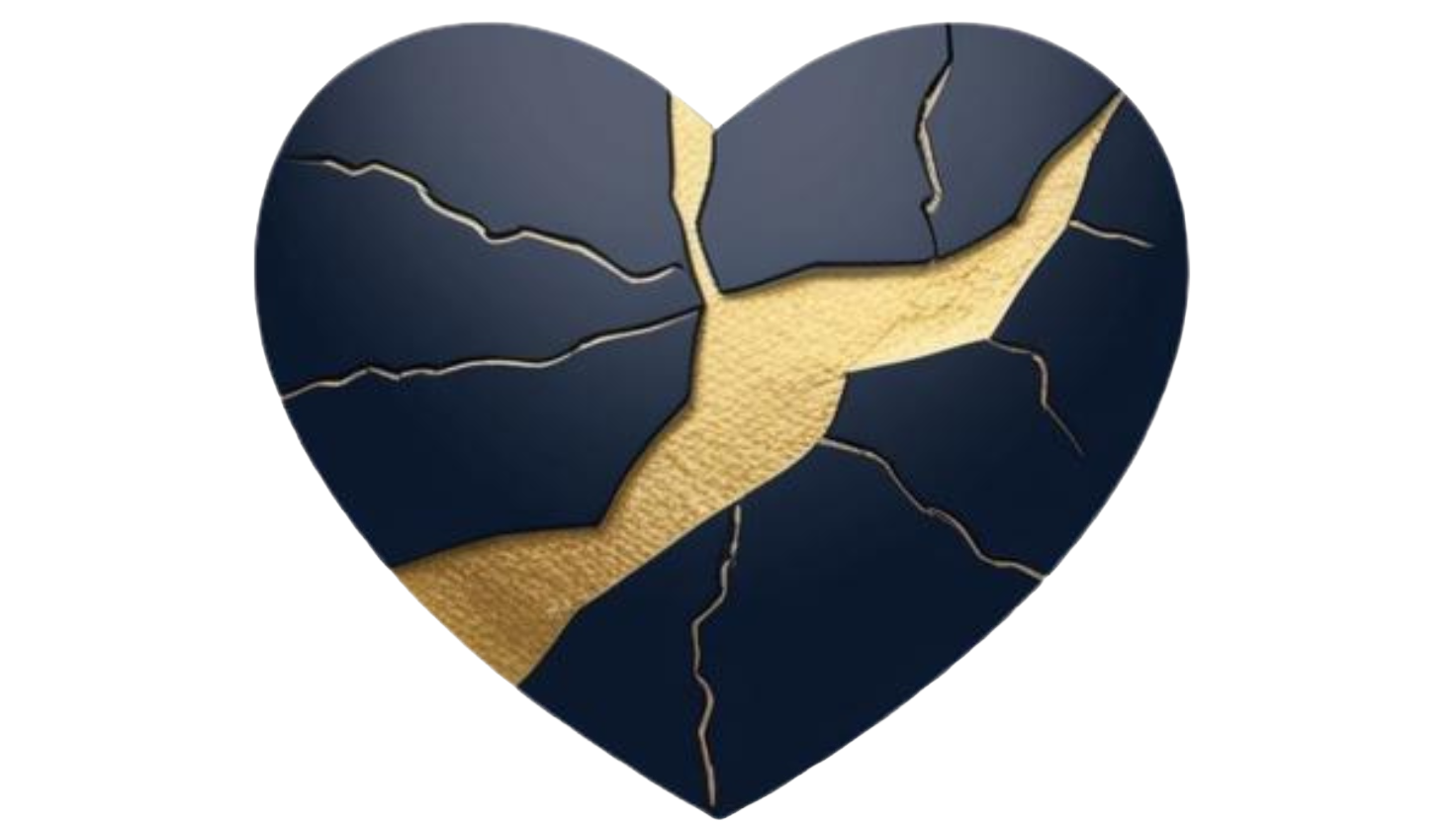
"Like kintsugi fixes broken pottery with gold, we turn relationship ruptures into renewal — with effort and focus."
Ready to rebuild the connection?
Couples sessions ($280) and individual sessions ($250) available Saturdays and Monday/Wednesday evenings at BREED Quakers Hill. No referral needed.